Latest verifiedv1.0.14878
Checked23 Aug 2026
ReleaseFull release
Official Steam page

Preparation brief / 10 hours

Build readiness.
Not a perfect route.

Use the preparation window to cover four household systems, find visible gaps, and enter the outbreak with a plan you can still change.

01

Inspect first. Existing conditions change what matters.

02

Fill gaps. Loot Spotter helps reveal missing categories.

03

Reassess later. Preparation becomes operations after the outbreak.
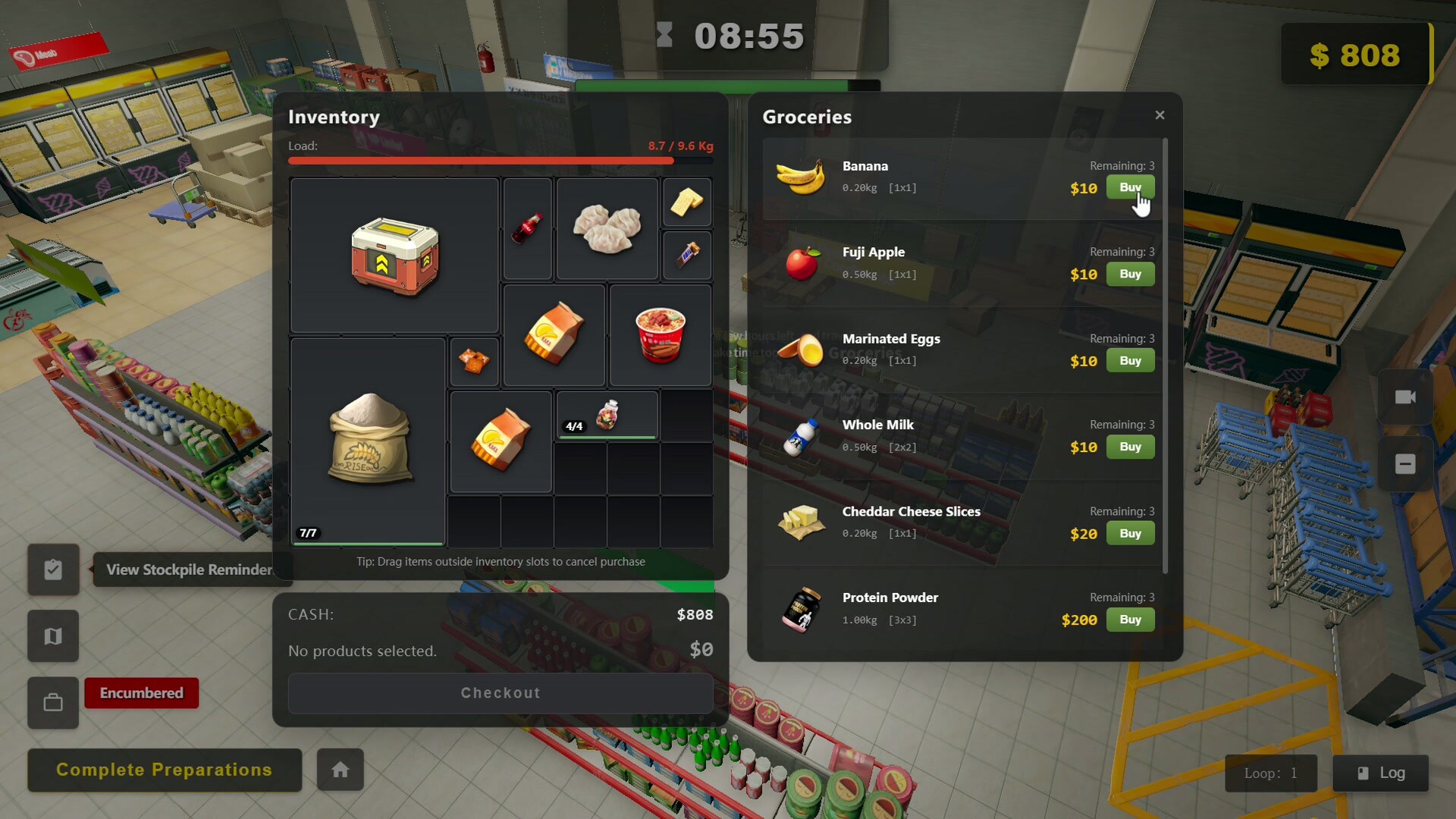
Survival Log pre-outbreak supermarket screen showing the countdown, cash, inventory weight, grocery choices, and Complete Preparations controlOfficial screenshot · Preparation phase
The preparation screen makes time, money, weight, and incomplete coverage visible at once. The pictured basket is context, not a recommended list.Steam store media ↗
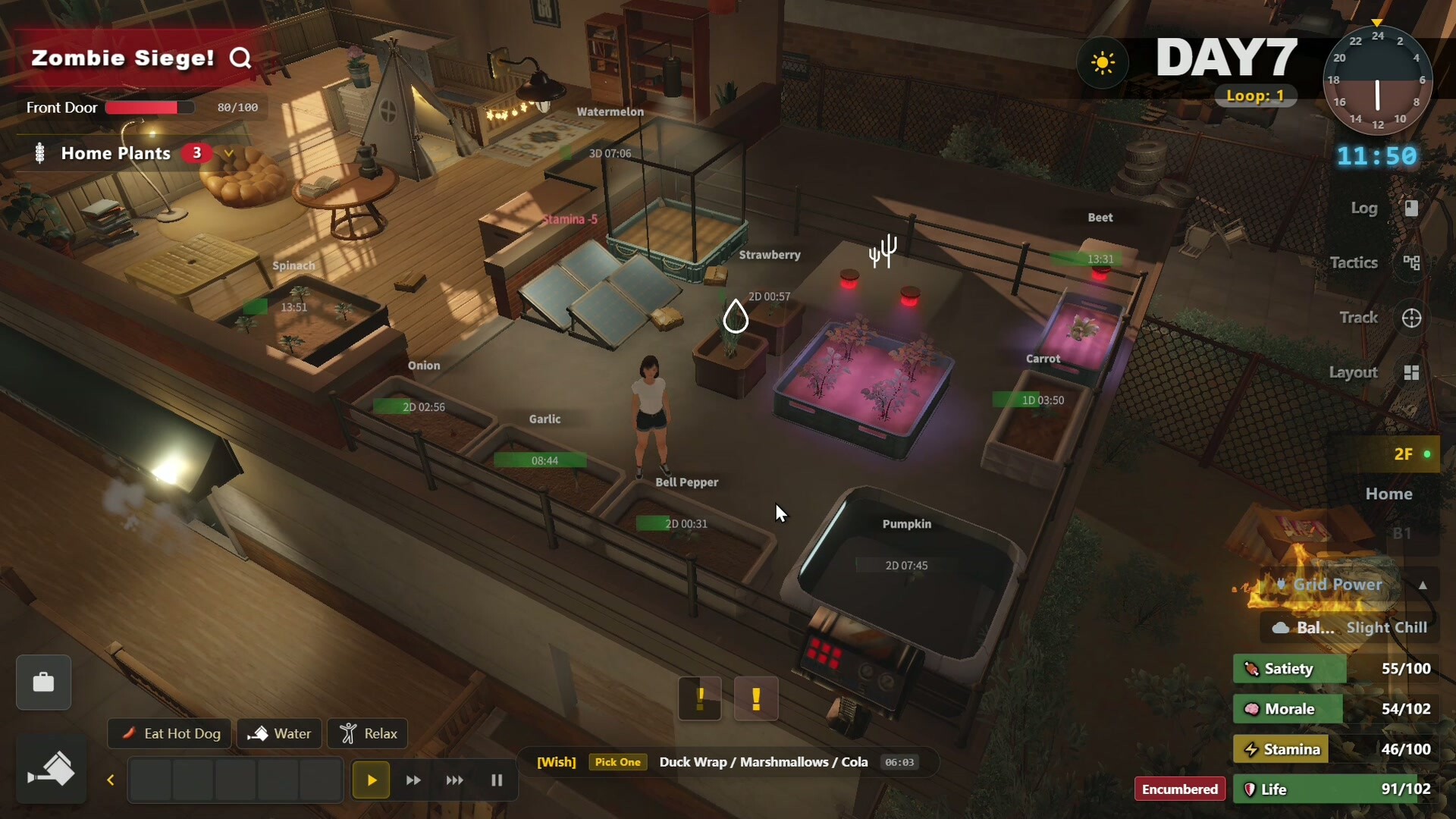
Survival Log Day 7 safehouse showing balcony crops, home rooms, current task, and survival status metersOfficial screenshot · Safehouse operations
After the countdown, the plan becomes a daily operating system.Source ↗

Four readiness systems

Balance the home without ranking the systems.

These areas work together. The numbering is for scanning, not priority order.

01
Daily continuity

Food / Water

Can the household meet immediate needs without hiding obvious gaps?

  • Inspect what is already available.
  • Use Loot Spotter to identify missing categories.
  • Prefer coverage and variety over one rigid shopping list.
02
Usable home

Shelter / Materials

Can the home support repairs, basic work, and safe movement?

  • Notice the condition and function of the space.
  • Keep useful materials visible in your plan.
  • Avoid treating decorative fullness as readiness.
03
Operational continuity

Fuel / Power

Which household functions will stop if power or fuel becomes constrained?

  • Identify what depends on power.
  • Separate essential continuity from comfort.
  • Plan to re-check after the outbreak changes priorities.
04
Readable inventory

Storage / Operations

Can you find, classify, and act on what the household owns?

  • Group supplies by purpose, not appearance.
  • Leave room for new items and changing needs.
  • Make missing categories easy to notice.
Tool methodLoot Spotter

The gap method

Let the interface reveal what your plan is missing.

  1. 1
    Start with the four systems.

    Name the household need before looking for a particular item.

  2. 2
    Use Loot Spotter to compare.

    Look for categories the current home does not cover well.

  3. 3
    Choose for coverage.

    Close meaningful gaps without assuming one universal purchase order.

Preparation checklist

A final scan, not a scorecard.

Check what your current run has covered. An unchecked item is a prompt to investigate, not proof that the run is wrong.

01Read the situation
02Cover the four systems
03Keep the plan flexible
04Hand off to the outbreak

Phase handoff

Preparation ends. Responsibility continues.

Before the outbreakPrepare
  • See the gaps
  • Cover the systems
  • Leave room to adapt
After the outbreakOperate
  • Re-check consumption
  • Maintain the home
  • Respond to new pressure

The first post-outbreak task is not to prove the preparation was perfect. It is to inspect what changed and update the plan.

How to read this page

Firm on the boundary. Flexible on the plan.

Confirmed
The game has a 10-hour preparation phase, four relevant household systems, and a Loot Spotter tool.
Practical guidance
We combine those facts into a gap-based preparation method intended to help, not prescribe.
Not presented as fact
Exact amounts, fixed budgets, best characters, item tiers, and guaranteed routes.